
Cyhyraeth (Wales)
The Haunting Cry Before Death
The Cyhyraeth is a spectral figure from Welsh folklore, known less by her appearance than by her voice. Her eerie, disembodied wailing is said to be heard before death, disaster, or misfortune, sometimes mourning those who are far from their homeland. Like the Irish Banshee, she stands at the boundary between warning and mourning: a presence whose cry announces that something terrible is approaching.

Essence
A spectral female presence whose mournful cries are heard as omens of death and disaster.
Folklore Note
Although the Cyhyraeth can seem frightening and malevolent, her wailing can also be interpreted as mourning rather than causing death. Some traditions even say that her cry could be heard for Welsh people dying far from their homeland, giving this spectral figure a surprisingly sorrowful dimension.

In a Nutshell
The Cyhyraeth is often compared to the Irish Banshee. Usually unseen, she makes her presence known through an eerie wailing that foretells death, epidemic, or catastrophe.
A quiet path disappearing into heavy mist, evoking the unseen landscapes of the Cyhyraeth tradition. Original photograph © Echoes Unheard.

Where To Find It
Traditions of the Cyhyraeth are particularly associated with South Wales, including the River Tywi and the coast of Glamorgan. Her cries belong to lonely landscapes where the unseen can feel unsettlingly close.


Why It Matters
The Cyhyraeth is more than a frightening omen. Tales in which she mourns Welsh people dying far from home give her a poignant connection to homeland, family, loss, and the idea that folklore can follow people wherever they go.

Quick Facts
Key facts and defining traits of the Cyhyraeth, at a glance.


Creature
Cyhyraeth

Pronunciation
roughly kuh-HUR-ithe

Language
Welsh

Region
Cymru (Wales), especially South Wales

Classification
Female apparition; banshee-like death messenger

Danger
★★☆☆☆ (Low)

Mischief
☆☆☆☆☆ (None)

Modern Appearances
Rare; survives mainly in folklore reference works and modern discussions of Welsh supernatural tradition

Alternative spellings
Cyhiraeth, Cyhearaeth

Meaning / Etymology
Possibly connected with “sinews” and a skeletal or fleshless figure

Culture
Welsh

Type
Death omen / spectral spirit
Alignment
Ominous / ambiguous

Violence
★☆☆☆☆ (Very Low)

First Recorded Sources
Documented in 19th-century Welsh folklore collections
Detailed Profile
Deep insights into the myth and legacy of the Cyhyraeth.

How the creature is traditionally described.
More often heard than seen. When visible, the Cyhyraeth is described as a spectral, hag-like woman with tangled hair, long black teeth, and unnaturally long, skinny, shrivelled arms. Some later accounts describe a deathly pale face, sunken eyes, and a generally cadaverous appearance.
Physical Description

Behaviour
How it acts and interacts with its surroundings.
The Cyhyraeth announces approaching death through terrible shrieks, cries and lamentations. Her wailing may name or refer to the person who will die, while an inarticulate scream could signify that the listener themselves was being mourned in advance. She is an omen rather than a hunter: her appearance does not generally involve pursuing or attacking her victims.

Supernatural gifts and remarkable traits.
-
Foretelling approaching death
-
Supernatural wailing and shrieking
-
Foremourning the dying
-
Naming or identifying the person destined to die
-
Appearing and disappearing mysteriously
-
Manifesting near water and crossroads
-
Approaching the homes of the gravely ill
Abilities

Symbols & Associations
Objects, places, animals, and ideas linked to the creature.
Death • Mourning • Wailing cries • Crossroads • Rivers • Dark water • Mist • Illness • Family • Forewarning • The unseen

The purpose it serves within traditional stories.
A supernatural death-omen and mourner. The Cyhyraeth gives audible form to approaching loss: her cry warns that death is near, while simultaneously sounding like a lament for the person who has not yet died. This places her in the wider Celtic tradition of female supernatural figures associated with death and mourning.
Role in Folklore
Modern Appearances

How the creature appears in contemporary culture.
The Cyhyraeth remains relatively obscure compared with internationally familiar Celtic beings such as the banshee. Today she appears mainly in collections and discussions of Welsh folklore, supernatural reference works, and modern retellings rather than having a large, established presence in mainstream popular culture.

Ideas for adapting the creature in creative works.
-
Gothic horror
-
Folk horror
-
Folklore retellings
-
Dark fantasy
-
Supernatural mystery
-
Psychological horror
-
Family sagas
-
Stories about grief and bereavement
-
Historical fantasy
-
Diaspora and homeland stories
Writing Uses

Where it is most often encountered.
Associated especially with lonely roads, crossroads, rivers and other bodies of water. She may also approach the home of someone who is gravely ill, bringing her supernatural warning directly to the household.
Habitat

Traditional encounters with people.
Feared as a messenger of death, the Cyhyraeth's relationship with humans is indirect. People hear or occasionally encounter her shortly before a death rather than interacting with her as they might with fairies or other folkloric beings. Her lament can therefore be understood both as a terrifying warning and as supernatural mourning.
Relationship With Humans

How it may be avoided, appeased, or overcome.
-
No traditional weakness is clearly established
-
No reliable method of driving her away is recorded
-
Her warning cannot necessarily prevent the foretold death
-
Protective charms are not a defining part of Cyhyraeth tradition
Weaknesses / Protections

Seasons, festivals, or moments traditionally connected with it.
-
Night
-
Dusk and fading light
-
Before an impending death
-
During grave illness
-
Dark or misty conditions
Associated Times

Its origins and evolution through history.
The tradition predates its major scholarly documentation. John Rhŷs's Celtic Folklore: Welsh and Manx (1901) drew upon earlier nineteenth-century accounts, including Choice Notes and William Howells. Rhŷs recorded regional variation in both the name and traditions and noted that in North Cardiganshire the corresponding spectre was known as Gwrach y Rhibyn.
Earliest Sources & Development

Similar beings from Celtic and neighbouring traditions.
-
Gwrach y Rhibyn - closely related Welsh death-omen
-
Banshee / Bean Sí - Irish supernatural mourner
-
Bean Nighe - Scottish washerwoman and death-omen
-
Cŵn Annwn - Welsh supernatural hounds associated with death and the Otherworld
-
Other Celtic female death-omens and supernatural mourners
Related Creatures

The deeper ideas and motifs it represents.
Death • Anticipatory grief • Mourning • Fate • Family • Separation • Fear of the unknown • Homeland • Exile • The boundary between life and death • Warnings that cannot change fate • Being heard but not seen
Themes
Topic
Consensus
Notes

Appearance
High
The Cyhyraeth is traditionally not seen at all. Historical descriptions consistently emphasize the voice, groaning or wailing rather than a physical apparition. Some physical “hag” descriptions belong more properly to the Gwrach y Rhibyn, with whom the Cyhyraeth is sometimes confused.

Behaviour
High
It wails, moans or groans before death. Accounts describe the sound approaching, passing through settlements or following routes associated with a later funeral.

Habitat
Medium
Strong traditions occur around the River Tywi and parts of South Wales, while accounts also place the Cyhyraeth along the Glamorgan coast, country lanes, villages and other locations. It is better understood as a wandering portent than a creature with a fixed habitat.
Relationship with Humans
High
Its presence concerns human mortality. The Cyhyraeth warns of or precedes death but is not generally described as attacking the person whose death it foretells. Some traditions even extend its cries to people who were born in its associated region but died elsewhere.

Origins / Nature
Low
The sources are much clearer about what the Cyhyraeth does than what it actually is. It is variously described as a spirit, crying spirit or groaning spirit. Attempts to give it a deeper mythological origin are considerably more speculative.

Moral Nature
Medium
The Cyhyraeth is terrifying and ominous, but the traditional accounts do not clearly portray it as evil. It predicts or announces death rather than necessarily causing it, leaving its moral nature ambiguous.

Magic / Abilities
High
Foreknowledge of death is its defining supernatural ability. Accounts attribute remarkably specific knowledge to it, including the approach of a death, funeral routes and, in some traditions, impending epidemics or disasters.
Weaknesses / Protections
Low
No consistent traditional weakness or established method of protection emerges from the major accounts. Unlike some fairy traditions, there is no standard Cyhyraeth remedy involving iron, salt or another protective object.

Death Omens / Prophecy
High
This is one of the strongest elements of the tradition. Hearing the Cyhyraeth signifies an approaching death, and some accounts say its route anticipates the path subsequently taken by the funeral procession.

The Threefold Cry
Medium
One detailed tradition describes three successive cries: initially loud and distant, then nearer and lower, and finally soft and close, resembling the dying person's eventual groans. It is a striking feature, but should not be treated as universal to every Cyhyraeth account.
Connection to Gwrach y Rhibyn
High
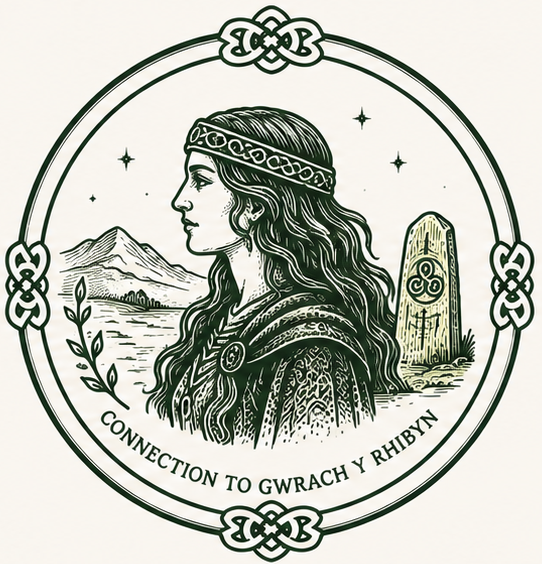
Historical folklorists explicitly acknowledge that the two traditions can overlap or become confused, while also treating them as distinguishable figures. The crucial distinction is that the Cyhyraeth is characteristically unseen and heard, whereas the Gwrach y Rhibyn has a visible monstrous form.

Archivist's Note
The oldest stories rarely speak with a single voice. This overview highlights where traditions converge while celebrating the places where they differ.
The Cyhyraeth is defined more by its haunting cry than by a physical form. This overview highlights the traditions most consistently associated with this mysterious Welsh omen of death.
Research Consensus
Understanding the Consensus

About the Consensus
This overview reflects themes that appear repeatedly across historical folklore collections and scholarly research.


How to Read It
High Consensus
Appears consistently across most traditional sources.
Medium Consensus
Common, but varies between regions or storytellers.
Low Consensus
Rare, disputed, or found only in a few traditions.

Why It Matters
Folklore evolves through generations of storytelling. Different regions preserved different traditions, and those variations are part of what makes these legends so enduring.
Creative Freedom
How much room does folklore leave for your imagination?
The Cyhyraeth offers enormous creative freedom because the folklore defines her most strongly through what people hear and what her cry foretells, while leaving much of her identity unexplained. Her origins, appearance, motives, and inner nature remain open to interpretation. Writers can preserve the essential idea of an unseen supernatural mourner while imagining who, or what, she really is, why she knows when death is coming, and whether her cries are warnings, lamentations, or something else entirely.
Creative Freedom: ★★★★★ Very High

Origins & Past
The folklore offers no single established origin for the Cyhyraeth. She might be an ancient spirit, the remnant of a forgotten being, a soul bound to a particular landscape, or something that has always existed wherever death approaches.

Role in the World
Her traditional role is to announce approaching death, but why she does so is left wonderfully uncertain. She could be a reluctant messenger of fate, a supernatural mourner, a guardian of the dying, or even part of the mysterious process that guides souls from one world to another.

Nature & Abilities
Keep her prophetic cry at the heart of the legend, then explore what lies behind it. Perhaps she can sense death approaching, hear the voices of the dying, follow families across generations, cross great distances, or perceive paths through time that humans cannot.

Encounters
Traditional encounters revolve around hearing rather than confronting the Cyhyraeth, leaving plenty of room for invention. What happens if someone follows the cry, answers it, tries to find its source, or realises that the unseen mourner is calling their own name?

Themes to Explore
Use the Cyhyraeth to explore anticipatory grief, unavoidable fate, mortality, family bonds, exile, homesickness, memory, and the fear of knowing what comes next. Her connection with mourning also allows stories to be deeply sorrowful without making her simply monstrous.

Your Unique Take
You do not need to explain everything. The Cyhyraeth can remain an unknowable presence at the edge of the story, or become its central character. Decide what her cries mean, what she wants, and whether hearing her is a curse, a warning… or perhaps even a final act of compassion.

Writer's Note
Echoes Unheard celebrates interpretation, not imitation. Let the old tales guide your path, but don't be afraid to leave footprints where no storyteller has walked before.

Story Potential
Strength of the creature's core concept and storytelling potential.
★★★★★

Horror Factor
Ability to unsettle, disturb, or terrify.
★★★★☆

Mystery
Depth of secrets, unknowns, and intrigue.
★★★★★

Wholesomeness
Capacity for warmth, wonder, or gentle tales.
★☆☆☆☆

Magic Level
Presence and impact of supernatural elements.
★★★☆☆

Mischief
Potential for playful trickery and chaos.
☆☆☆☆☆

Danger
Threat level and risk to characters.
★★☆☆☆

Tragic Potential
Capacity for sorrow, loss, and heartbreak.
★★★★★
Tragic Potential
Capacity for sorrow, loss, and heartbreak.
★★★★☆
A writer's guide to the Cyhyraeth's storytelling strengths and narrative possibilities.
Writer's Ratings
Creative Potential

4.8/ 5
★★★★☆
The Cyhyraeth offers exceptional creative potential because so much of her power lies in what remains unseen. A disembodied cry that foretells death can become the centre of folk horror, supernatural mystery, tragedy, historical fantasy, or an intimate story about grief and family. Writers can explore what happens when someone hears the warning, recognises whose death it predicts, or desperately tries to prevent a fate that may already be fixed. Traditions connecting her cries with people dying far from home also open the door to stories about exile, migration, belonging, and a supernatural bond with Wales that distance cannot break.
Writer's Note
Folklore is wonderfully inconsistent. Let these ratings inspire your imagination, not limit it.
Story Ideas
These are not rules. They are simply doors waiting to be opened. Where they lead is entirely up to you.
And if none of them lead where you wish to go, create a door of your own.

The Third Cry
A woman hears the Cyhyraeth cry twice outside her home and becomes desperate to discover whose death the third and final cry will foretell.

The Funeral Road
After hearing an unseen spirit wailing along a forgotten country path, a young man discovers that every place it passed will form the route of an approaching funeral.

A Cry Across the Ocean
A Welsh emigrant living thousands of miles from home begins hearing the Cyhyraeth and must discover whose death has carried its mourning across the sea.

The Village That Heard Nothing
When the Cyhyraeth suddenly falls silent after generations of warning a remote Welsh village of approaching deaths, the villagers begin to fear what the silence means.

Do Not Answer Her
A traveller hears a disembodied voice crying their name from the mist and, instead of fleeing, calls back... only to discover that the Cyhyraeth was never calling for them.
Writer's Note
These ideas are starting points, not destinations.
Borrow one detail, combine several prompts, or ignore them completely if another path calls to you. The best stories often surprise their own authors.
Sources
The profile of the Cyhyraeth is drawn from Welsh oral tradition, early folklore collections, and later scholarly documentation. Below are the historical texts and modern reference works that helped shape our reconstruction of this mysterious death-omen, known above all through its haunting and prophetic cry.

British Goblins: Welsh Folk-Lore, Fairy Mythology, Legends and Traditions — Wirt Sikes (1880)
Books & Historical Sources


Every legend has many storytellers. If you've discovered a fascinating source about the Púca, we'd love to learn from you. Recommend books, articles, podcasts, or historical references in the comments below, and help this collection continue to grow.
Further Reading
Archivist's Note
Every source is a doorway, not a destination. The oldest stories were shaped by countless voices across centuries. Read widely, compare versions, and let the traditions inspire your own path rather than define its limits.


The Next Story begins with yours.
You've explored the legend.
Now write the next chapter.


Contribute to the Archive
Every legend has many voices. Help the Archive grow by sharing another historical source, a local tradition, or a writing prompt inspired by this creature.
Page Information
-
Research completed: August 2026
-
Last reviewed: August 2026
